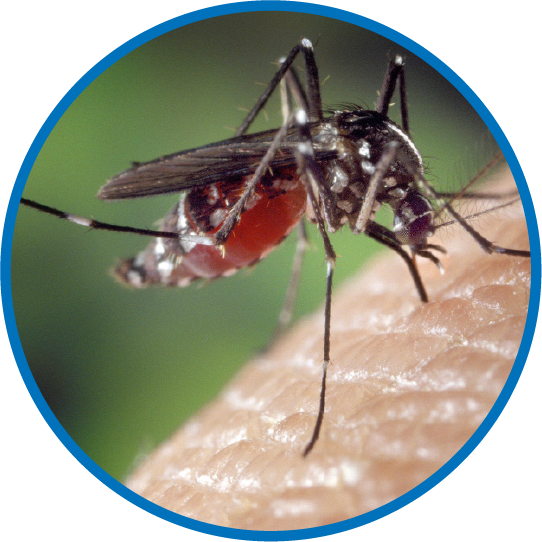
Adults are small black mosquitoes with conspicuous white markings, including a single white stripe down the middle of the thorax and banded legs. They are often called the Asian tiger mosquito.
Biology
Females lay eggs just above the water line in small containers. Eggs hatch when flooded. Larvae develop in water and pupate before adults emerge. Development from egg to adult can be completed in about 5-7 days under warm conditions. Adults commonly live for a few weeks, with females often surviving longer than males.
Habit
Aedes albopictus commonly breeds in containers such as buckets, plant saucers, tyres, roof gutters and other places holding clean stagnant water. It bites during the day and may transmit mosquito-borne diseases such as Dengue fever, Zika virus disease, Chikungunya & Yellow fever.
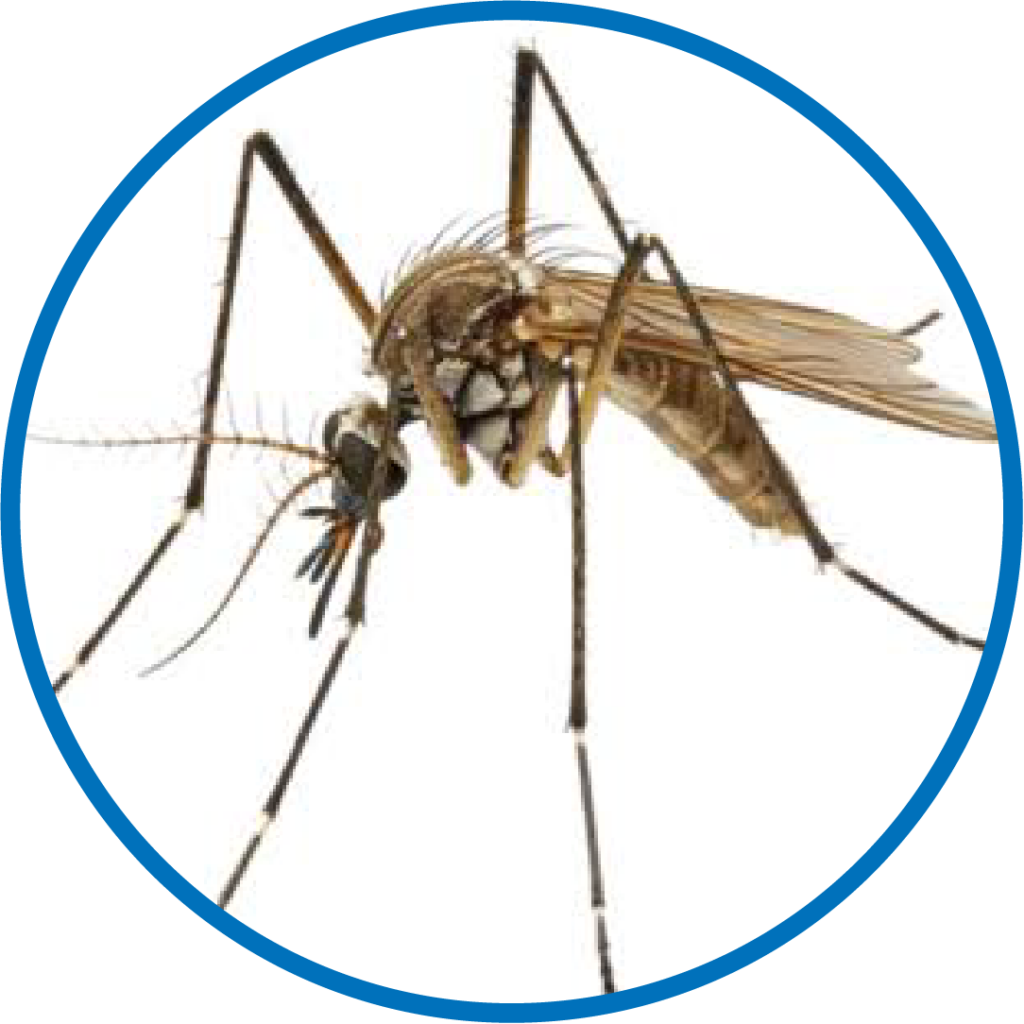
Culex mosquitoes are generally brown to gray mosquitoes with slender bodies, long legs and clear wings. Adults are usually about 4-10mm long. Females have piercing mouthparts used for blood feeding, while males feed on plant nectar.
Biology
Females lay eggs on the surface of standing water, often in floating rafts. The larvae live in water and feed on organic particles before pupating. In warm conditions the life cycle from egg to adult may be completed in about 7-10 days, though cooler conditions slow development. Adult males usually live about one week, while females commonly live several weeks and may survive longer in favourable conditions.
Habit
Culex mosquitoes commonly breed in stagnant or polluted water such as drains, ditches, ponds, septic areas, unmaintained pools, containers and storm-water channels. Adults are most active from dusk to dawn and may transmit diseases such as Japanese encephalitis, West Nile virus.