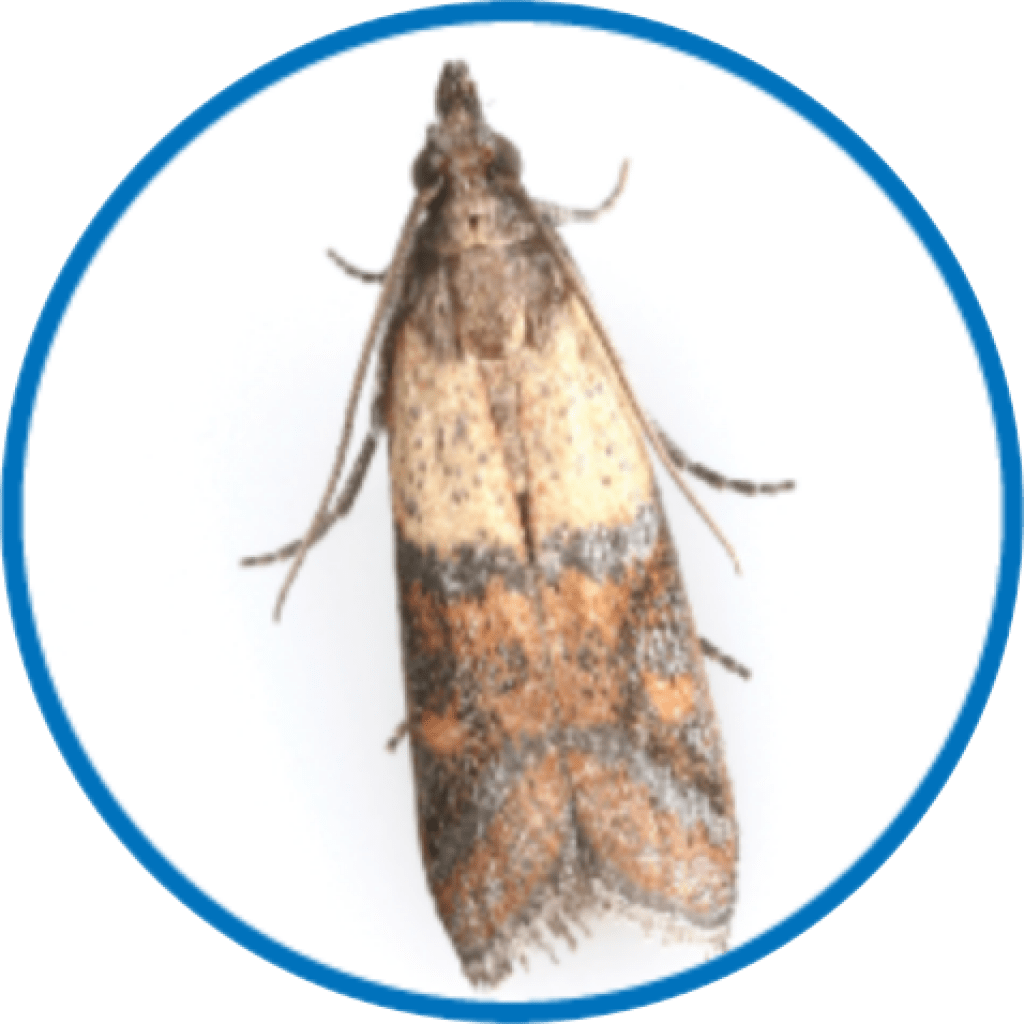
The Indian meal moth has a wing expanse of nearly 20mm. Markings of the forewings are reddish brown with a copper luster on the outer two-thirds, but whitish gray on the inner or body ends. The hind wings lack distinctive markings and are more or less uniformly gray.
Biology
A mature female lays 100 to 300 eggs on food material, either singularly or in groups of twelve to thirty. Larvae begin to hatch in two to fourteen days, depending on environmental conditions. Adults emerge in four to thirty days, mate, and females lay the next generation of eggs. Adults live from five to twenty-five days.
Habit
These moths like to feed on dried fruits, grains, seeds, nuts, chocolate, candies, bird seed, dog food, powdered milk, dried red peppers and candy. Attracted to the light, these bugs are found worldwide in areas where food is stored, such as grocery stores.
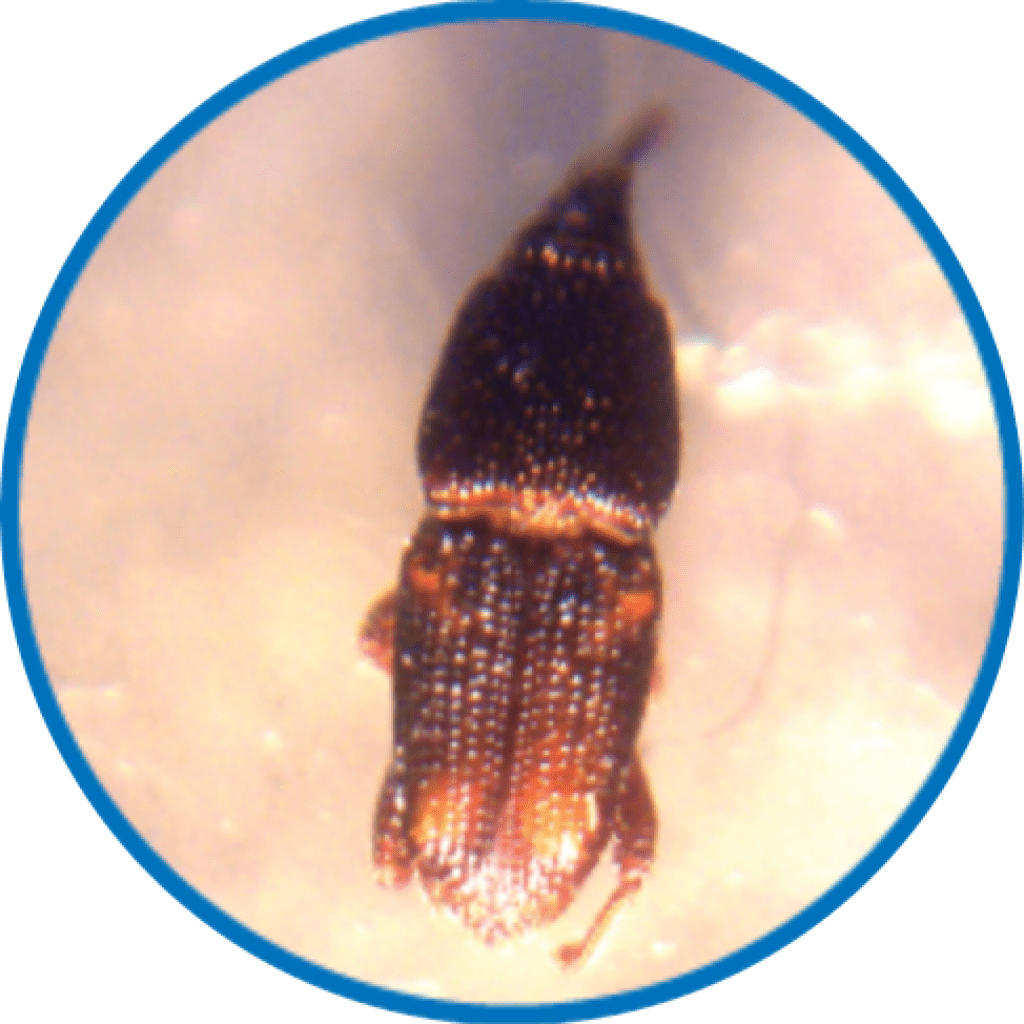
Several types of weevils, including the rice, granary, maize and bean/pea weevils can be encountered in the home. The true weevils have a long snout on the head. The rice weevil is about 3-mm long dark reddish brown, with four pale spots on the upper surface. The granary weevil is slightly larger (4 mm), of the same body style and entirely dark chestnut-brown.
Biology
The egg, larva, and pupa stages of both weevils occur in the grain kernels and are rarely seen. The larvae are white, legless. The life cycle requires about 4 weeks and there may be three to five generations per year.
Habit
They are usually found in grain storage facilities or processing plants, infesting wheat, oats, rye, barley, rice, and corn. Although not often found in the home, sometimes they infest table beans, acorns, chestnuts, birdseed, sunflower seeds, and ornamental corn. They are occasionally found in macaroni and spaghetti.
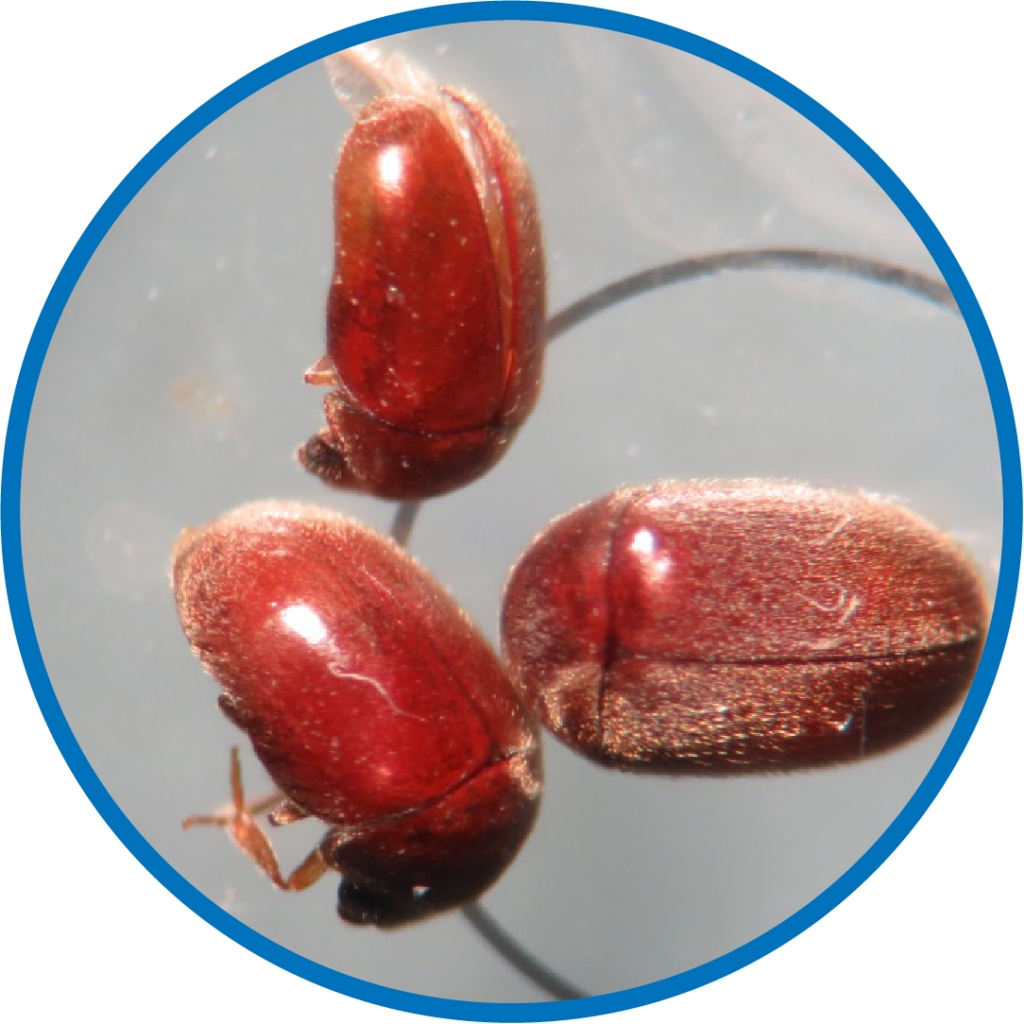
Adults are small reddish-brown beetles about 2-3mm long. The body is oval and hump-backed when viewed from the side, and the head is partly hidden beneath the thorax.
Biology
Females lay eggs on or near stored products. Larvae feed within the food material before pupating. Under warm conditions the life cycle is usually completed in about 6-8 weeks, though it may vary with temperature and food quality. Adults commonly live about 2-4 weeks.
Habit
Cigarette beetles infest tobacco, dried herbs, spices, cereals, nuts, seeds, dried flowers and many stored foods. Adults fly readily and are attracted to light. Infestations are often traced to overlooked stored products.
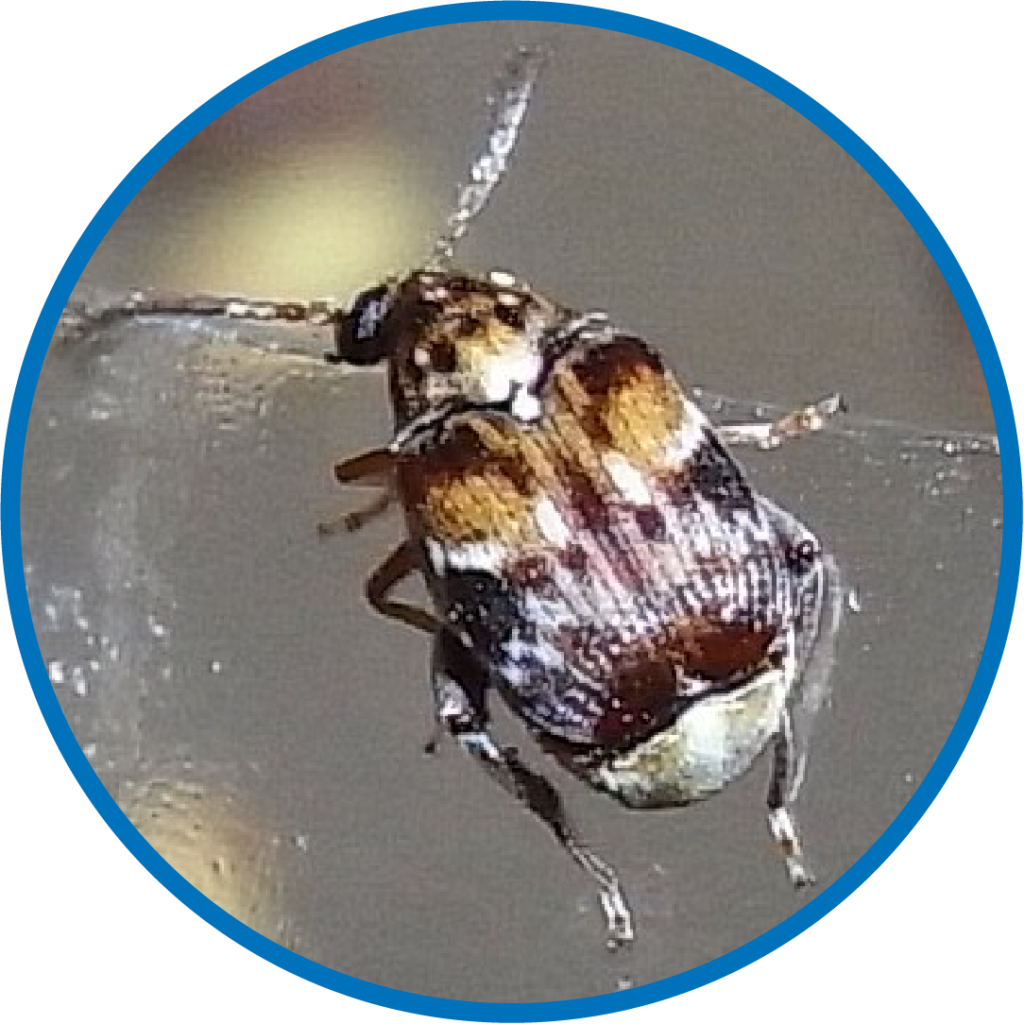
Adults are small beetles about 2-4mm long, usually brownish with mottled markings. They are seed beetles rather than true weevils and do not have the long snout typical of grain weevils.
Biology
Females lay eggs on the surface of beans and peas. The larvae bore into the seed and develop inside. Adults emerge by cutting circular exit holes in the seed coat. The full life cycle may be completed in about 3-4 weeks under warm, suitable conditions. Adults usually live about 1-2 weeks.
Habit
Cowpea weevils infest stored legumes such as cowpeas, mung beans, lentils and other beans. Infested seeds may contain larvae hidden inside, and damage is often noticed only after adult beetles emerge.
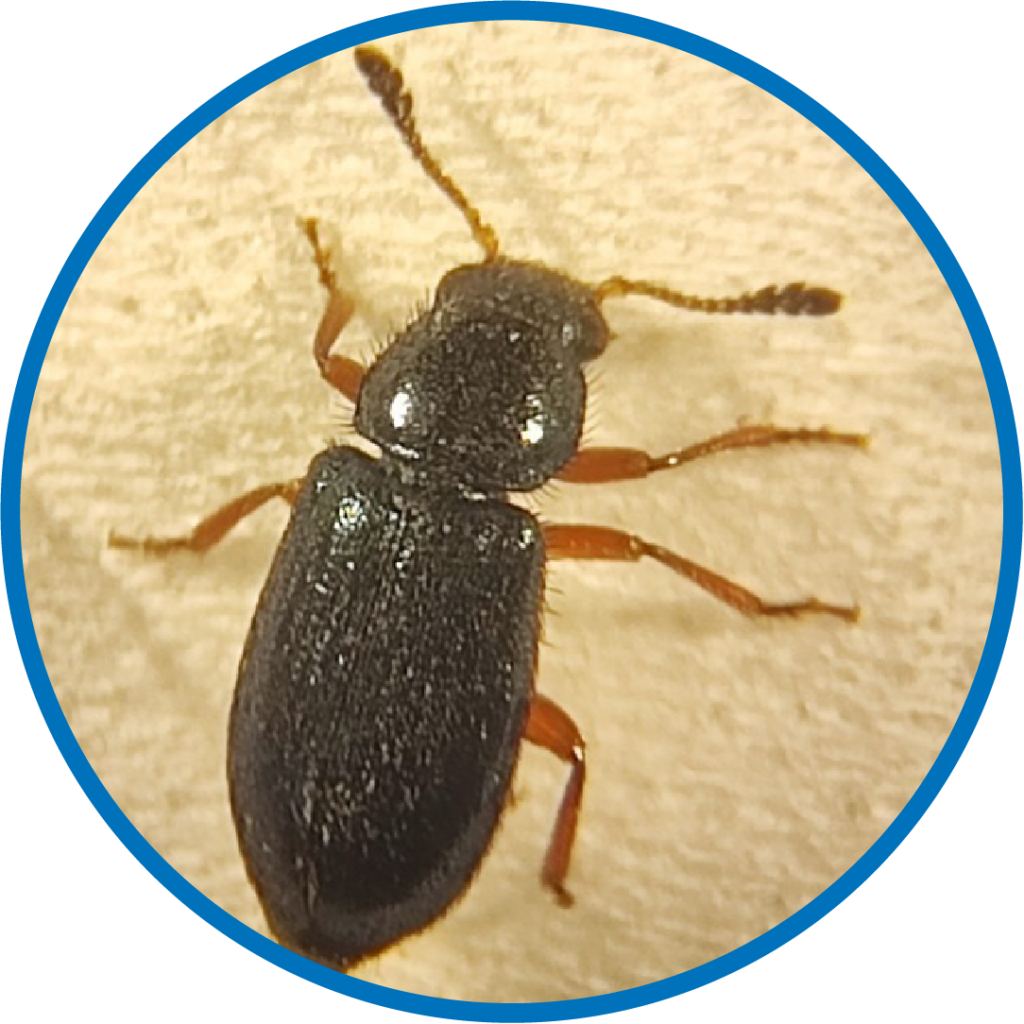
Adults are metallic blue-green beetles about 4-5mm long with reddish legs. The body is narrow and slightly flattened. Larvae are pale and grub-like with darker heads.
Biology
Females lay eggs on suitable animal products. Larvae feed on the material and pupate nearby. Development depends on temperature and food quality; the full life cycle may take about 36-150 days, and under favourable conditions about 1.5-5 months. Adults may remain active for several weeks to a few months, with females laying eggs for up to about three months.
Habit
Red legged ham beetles infest dried meats, fish meal, bones, hides, cheese and other protein-rich stored products. They may also be found around carrion and animal remains.