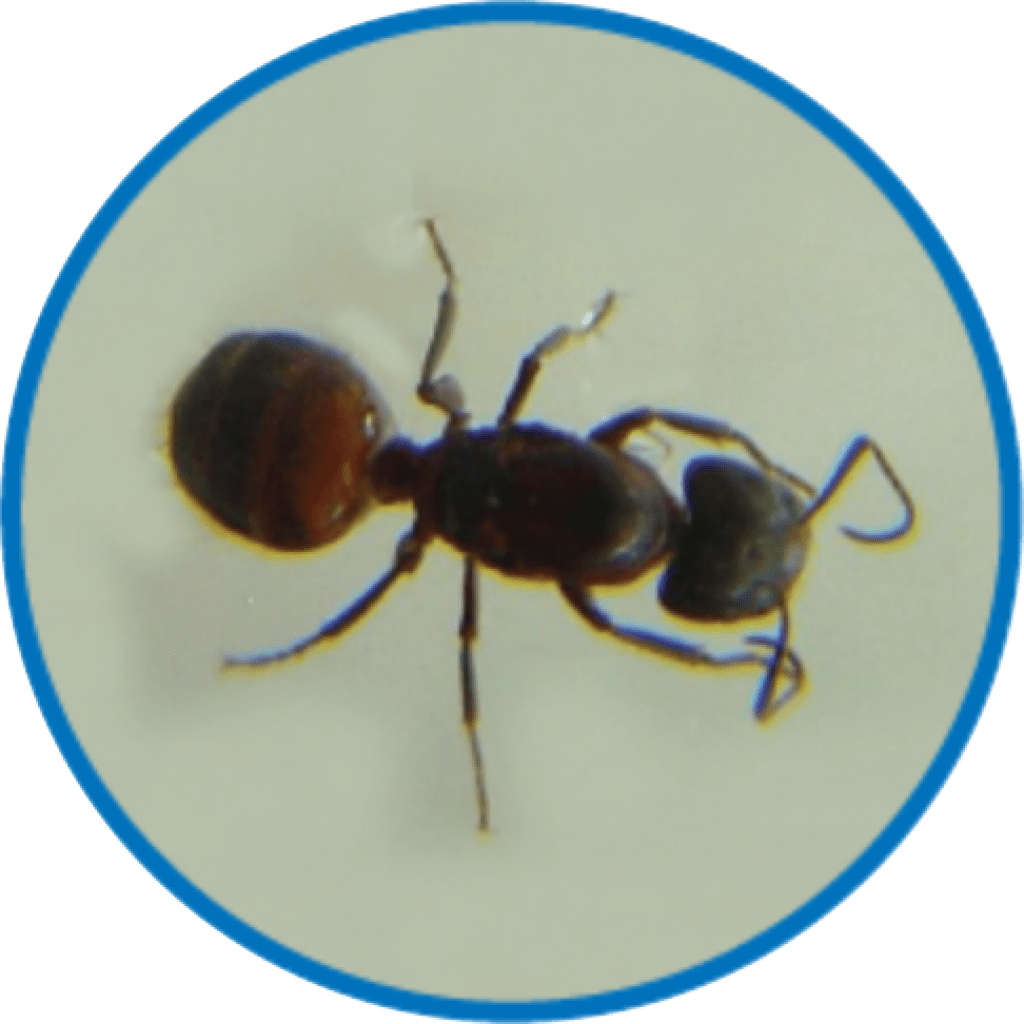
Carpenter ant workers are about 6 – 12mm long, dull black with reddish legs and golden hairs covering the abdomen. Queens are about 16mm long. Other colour combinations of carpenter ants can be of red and black, or completely red or brown.
Biology
Carpenter ant colonies usually contain over 3,000 workers and will reach maturity in about 3 to 6 years. Full development from egg to adult takes at least 60 days for the worker ants. Swarmers appear in spring and summer months.
Habit
Carpenter ants live both inside and out and make their home in moist decaying wood. Outside nests are typically located in rotting fence posts, stumps, old firewood, dead portions of standing trees, and under stones or fallen logs.
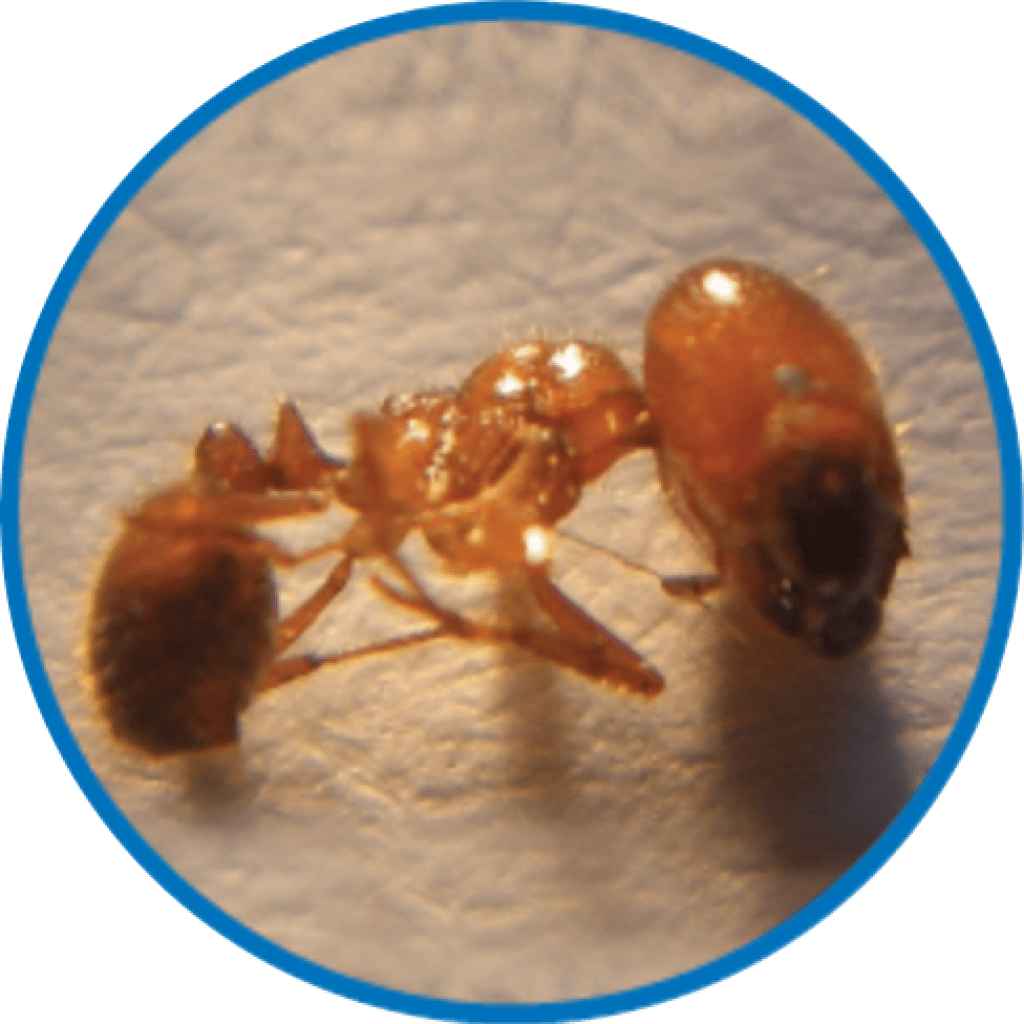
Both native and imported fire ants are small, dark orange/brown ants containing workers of various sizes. When their mound is disturbed the will quickly gather and attack as a large group.
Biology
Total time from egg to adult is approx 30 days. The workers can live up to 180 days and the queens live from two to six years.
Habit
A typical fire ant colony builds large mounds in open areas, often near moist areas, and feeds mostly on young plants, seeds and other insects. Fire ants often attack small animals and can kill them.
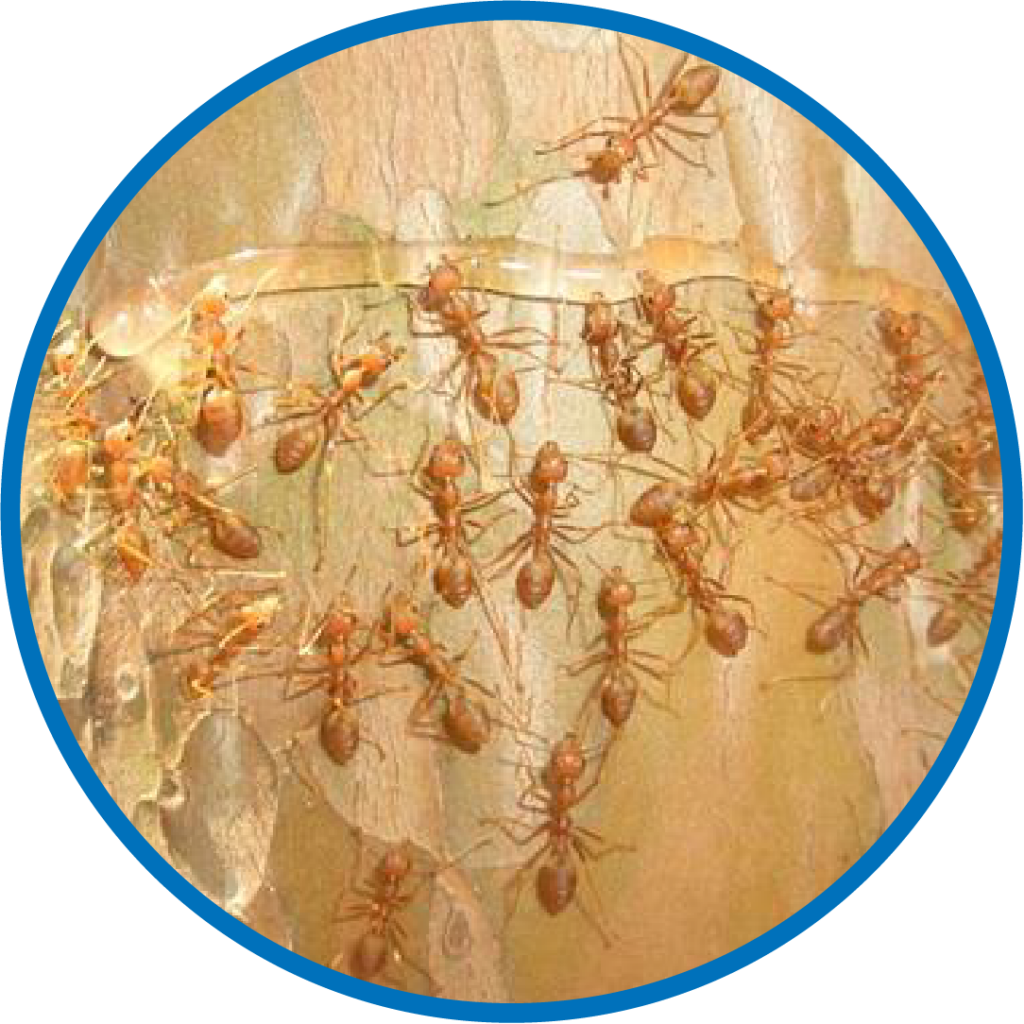
Weaver ants are slender, reddish to orange ants with long legs and large eyes. Workers vary in size and are active, aggressive foragers commonly seen on trees and shrubs.
Biology
Colonies are social and contain queens, workers and brood. Workers pull leaves together and use larval silk to bind them into nests. Development from egg to adult is temperature-dependent and may take about 4-6 weeks in warm tropical conditions. Individual worker lifespan is variable, while a mature colony may persist for several years and has been reported to last about eight years.
Habit
Weaver ants live mainly outdoors in trees and landscaped areas. They prey on other insects and also tend honeydew-producing insects. They may bite when disturbed and can become a nuisance near buildings and gardens.
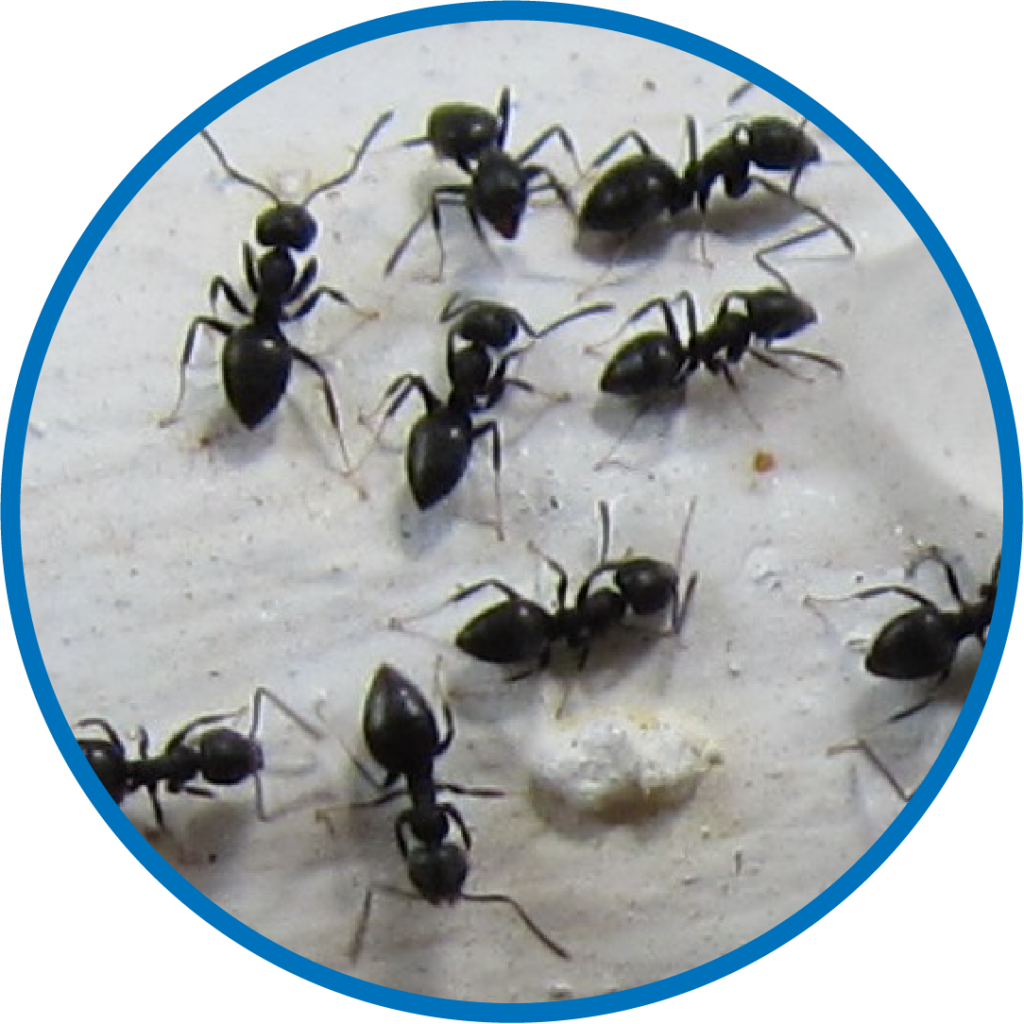
White-footed ant workers are small, about 2.5-3mm long, with a dark brown to black body and pale yellowish-white feet. Trails may contain large numbers of workers.
Biology
Colonies are large and may contain many queens and many satellite nests. Workers forage widely and exchange food within the colony. Colonies can spread by budding when groups of ants move to new nest sites. Development is temperature-dependent and is estimated at about 4-6 weeks in warm tropical conditions. Individual workers can live for months and, in favourable colony conditions, may live longer.
Habit
White-footed ants nest in wall voids, roof spaces, tree cavities, under bark, in leaf litter and around landscaped areas. They feed on honeydew, nectar and sweet liquids and often trail into buildings.
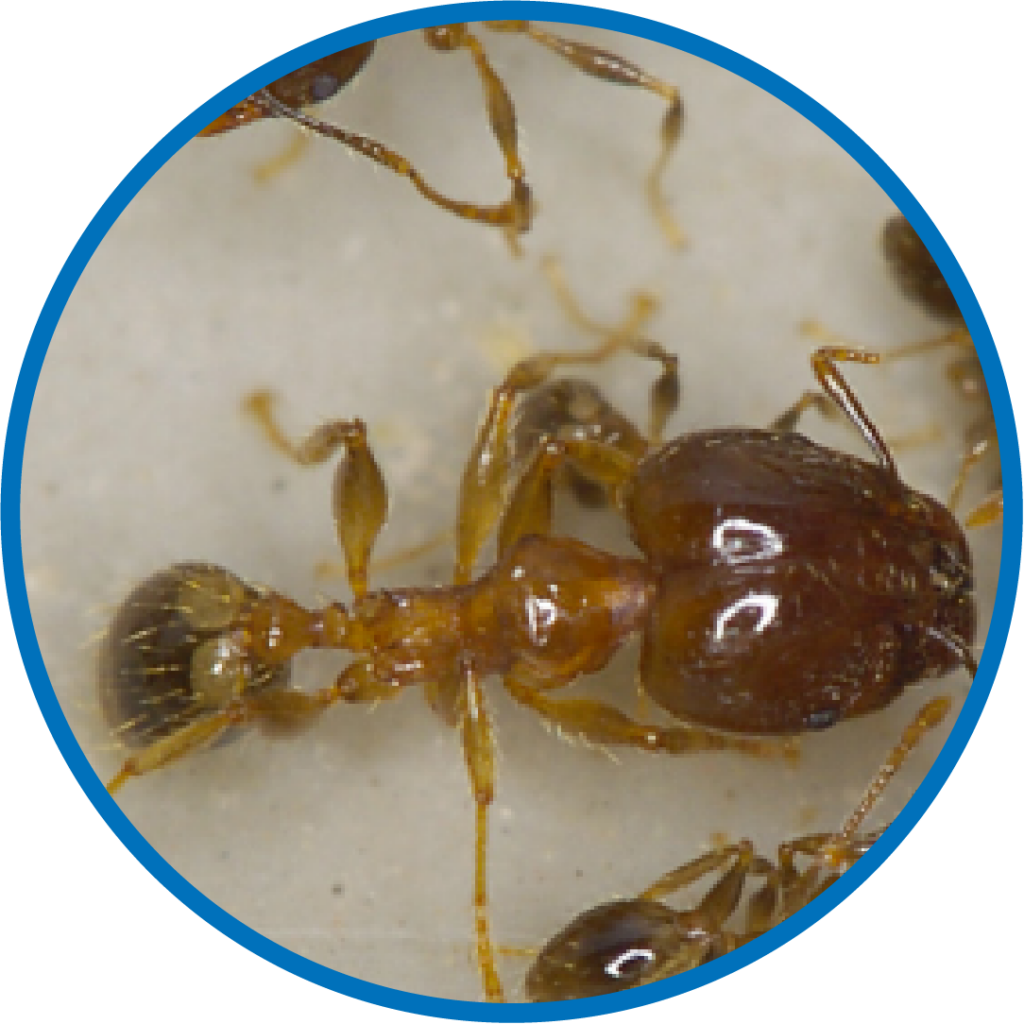
Big headed ants are small brown to reddish-brown ants with two worker forms. Major workers have noticeably enlarged heads, while minor workers are smaller and more uniform in shape.
Biology
Colonies may contain multiple queens and many nests connected by trails. Workers care for eggs, larvae and pupae, and colonies may expand rapidly by budding into nearby areas. Development from egg to adult may take about 34-38 days at warm temperatures around 26-27°C. Workers can live for several months, while queens may live longer under suitable colony conditions.
Habit
Big headed ants nest in soil, under stones, along foundations, in lawns and around paved areas. They feed on seeds, dead insects, honeydew and household foods. Soil pushed from nests may appear as small piles.